
Becoming an Alternative Community
The thoughtful and wide-ranging contributions in this issue of ChinaSource Journal are particularly relevant to where China’s church finds itself today.
The thoughtful and wide-ranging contributions in this issue of ChinaSource Journal are particularly relevant to where China’s church finds itself today.

Drawing on fifteen years in mainland China, Hugh Battye reflects on the very different worlds he encountered—and on what can disappear when we speak of “China” as though it were a single cultural experience.

By looking not only at the church in China itself but also to Christian communities in the global Chinese diaspora, these scholars offer both cautionary tales as well as hopeful visions of what it means to be a witness to the “public God.”

The thought patterns formed by long-term, deeply embedded atheistic education and scientism remain a major epistemological threshold that Chinese diaspora Christians must cross in evangelism, as well as a stronghold that apologetics must address.
In the era of new media, every Christian is not only a user of media products but also a creator and distributor of content.

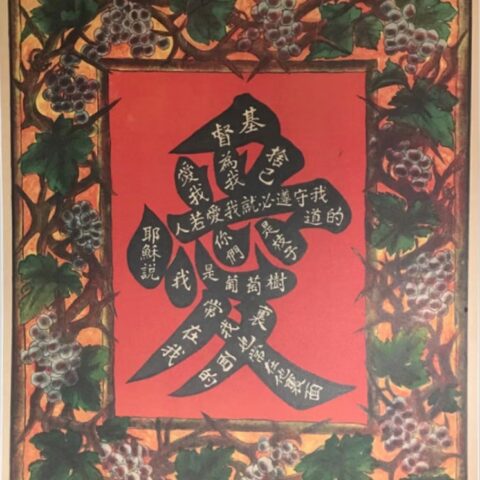
God is glorified as Christ’s followers become disciples, showing through their fruit—their true identity in him. The command here is not to bear fruit, but to abide.

In some ways, the challenge the older generation faced is the same as ours. If you are asked the three questions this report raises, what would be your answers in the 21st century?

The Chinese diaspora in Europe is transitioning from being a “mission field” (the recipient of gospel activity) to a burgeoning “mission force” (the agent of missional change).

On Wednesday, August 5, ERRChina will host an online book club discussion.

This book explores the expansion of what is involved in missions and member care, member care in different regions and different sectors, and staying the course in good practice.

If Chinese Christians can develop robust local sources of information and reflection, they can move away from a “nervous” existence and learn to navigate risks, mitigate pressures, and live out their faith meaningfully within the land they inhabit.

Long before the word “Trinity” was rendered into Chinese as sanwei yiti (三位一體), Christians in Tang China were already searching for language to express the mystery of Father, Son, and Holy Spirit.