
Charting a Path Forward
If unity is indeed the key to world evangelization, then the hard work of reconciliation will be required to get there.
If unity is indeed the key to world evangelization, then the hard work of reconciliation will be required to get there.

Learning to receive one another amid our differences while holding fast to truth may be a discipline the entire Chinese church must continue to practice.

In mid-July 2026, Chinese Christian scholars and pastors from various denominational backgrounds in the United States, the United Kingdom, China, South Korea, Singapore, Malaysia, Taiwan, and Hong Kong gathered in Kuala Lumpur, Malaysia, for the three-day Third Public Theology Conference.

What was most noteworthy about this congress was not only what it said, but also how it was experimenting with new ways to speak, lead, communicate, and understand the next generation.

After leaving Kuala Lumpur, one question stayed with me: were we, throughout the conference, actually speaking about the same thing when we used the term ‘public theology’?
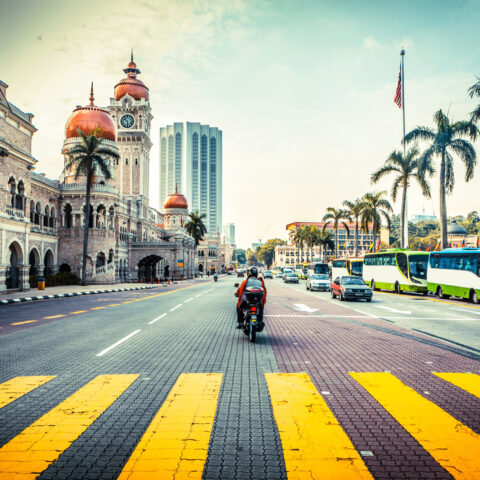
Does the gospel of Christ also concern a nation's public life: justice, poverty, corruption, the environment, refugees, and people suffering in disasters? I believe the answer is yes.

We long for every article and resource we produce to serve as a catalyst that helps us pray with greater depth and focus.

The thoughtful and wide-ranging contributions in this issue of ChinaSource Journal are particularly relevant to where China’s church finds itself today.

The public witness of the church is not to win political power or cultural hegemony in this “competition of gods.” Rather, it is to imitate Christ, seeking the peace of the city in exile, living out embodied love in the virtual, and witnessing to the eternal kingdom in suffering.

Like all theology, public theology begins not with issues, but with the knowledge of God.
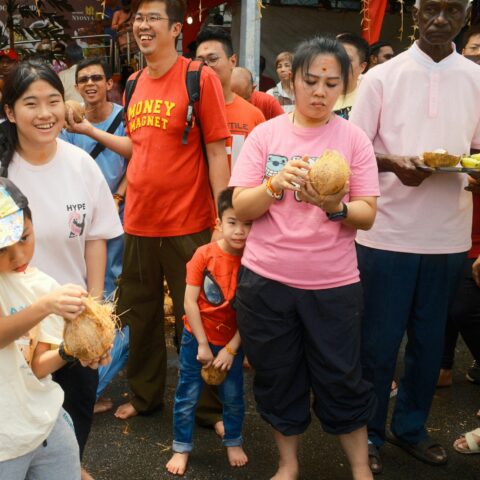
Can the Malaysian Chinese Church shift from a community primarily concerned with its own survival to one that participates in the holistic mission of God and seeks the peace of this land?

In a context where public space is restricted and church institutionalization is still taking shape, the “community of virtue” reminds the Chinese house church that public theology is not only about how the church speaks to the world, but also about whether the church itself lives out a life of peace, justice, humility, and mutual service.