
Chongqing!
You may have heard that Chongqing is China’s largest city by population (approximately 30 million), but as is the case with many things in China, “nothing is as it seems.”
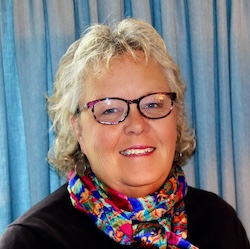
周寧現任華源協作夥伴關係與中國事工副總裁,並擔任《每週中國快訊》(ZGBriefs)編輯。
加入華源協作之前,周寧曾在中國工作 28 年,期間擔任過英語教師、語言學生及專案主任,也為在中國工作的機構與企業提供跨文化培訓。她曾在明尼蘇達州的西北大學(University of Northwestern–St. Paul)教授中文,並在惠頓學院(Wheaton College)及泰勒大學(Taylor University)教授中國文化與溝通。
周寧擁有西北大學社會科學學士學位,以及聖湯瑪斯大學(University of St. Thomas)教學碩士學位。
周寧著有 Survival Chinese Lessons 和 The Bells Are Not Silent: Stories of Church Bells in China 兩本書。
周寧也經營個人部落格 Outside-In(joannpittman.com),分享對中國、明尼蘇達州、旅行,以及「如何在不屬於自己的地方好好生活」等主題的觀察與思考。
讀者也可以透過 X(@jkpittman)及 Facebook(@authorjoannpittman)關注周寧的動態。
周寧目前定居美國明尼蘇達州新布萊頓(New Brighton)。
You may have heard that Chongqing is China’s largest city by population (approximately 30 million), but as is the case with many things in China, “nothing is as it seems.”

A few years back I was talking with a Chinese scholar friend of mine about Islam in China. In what has to be one of the clearest examples of pragmatic religiosity I’ve encountered, he told me, “Islam has no future here because Han Chinese will never give up eating pork.”

In what has to be one of the most fascinating lenses through which to observe history and societal change, this short film chronicles recent Chinese history by looking at the different things Chinese people have lined up for over the years.

If you want to find out what is really going on—I mean really going on—in China, ask a taxi driver. Since they spend all day conversing with people from all walks of life, getting various takes and perspectives on the issues of the day, few people have a better feel for the mood.

On May 21 ChinaSource President Brent Fulton spoke at Emmanuel English Church in Hong Kong. Drawing from his book China’s Urban Christians: A Light that Cannot Be Hidden, Fulton talked about how the kingdom of God has spread in China, despite difficult circumstances.

Here’s a question for you: how do you lip-read when everyone is wearing an anti-pollution facemask? One hearing-impaired woman from Great Britain found out while doing an internship in Beijing. She told her story to the BBC in "Toxic Talk: Trying to Lip Read in China."

I’ve only been to Dalian once, and that was way back in 1992. I was studying Chinese in Changchun at the time, and a classmate and I decided to head to Dalian for a weekend getaway at the only western hotel in the city, a Holiday Inn. Western food! CNN! It was great.

This month marks the 50th anniversary of the beginning of the Great Proletariat Cultural Revolution, a political campaign launched by Chairman Mao. The purpose was supposedly to give a new generation the experience of revolution; however, it was actually an outcome of a power struggle between Mao and the leadership of the Chinese Communist Party.

Are you looking to start a business to fulfill a mission or to bless a community? The latest ChinaSource Conversations podcast, “Businesses that Bless,” seeks to answer that and other questions related to doing business in China.

We hardly even notice them anymore, and when we do, we probably either roll our eyes or chuckle. I’m referring to the ubiquitous “Made in China” labels that adorn our consumer goods. Televisions, underwear, souvenirs, computers—you name it, it’s probably made in China!

Earlier this month a spokesman for China’s National People’s Congress (NPC) announced that the NPC Standing Committee is scheduled to review the draft law governing foreign NGOs operating in China.

There were a couple of adoption stories out of China in the past few weeks that caught my eye. The first was an article in Christianity Today about the drop in global adoptions, as reported by the US State Department in their Annual Report on Intercountry Adoptions.